How to Optimize Your Brand for AI Answer Engines in 2026
AI search is no longer a future trend — it's reshaping how users discover brands today. When someone asks ChatGPT, Perplexity, or Google AI Overviews a question in your industry, will your brand be the answer? That's the core question of AI search optimization.
What Is AI Search Optimization?
AI search optimization (also called AEO or generative engine optimization) is the practice of structuring your content, entities, and technical signals so AI systems can retrieve, understand, and cite your brand in generated responses. It complements traditional SEO — many of the same fundamentals apply, but the execution differs.
1. Define Your Entity Clearly
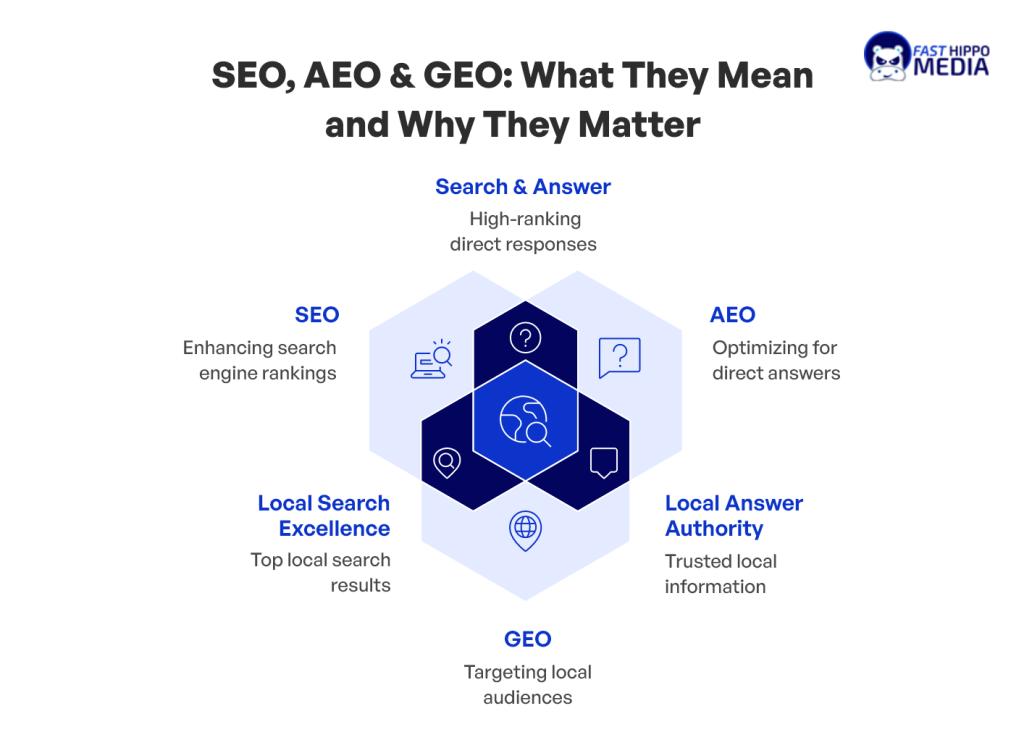
AI models extract facts about entities — people, companies, products. Make sure your site clearly states who you are, what you do, and who you serve. Use consistent naming across your About page, schema markup, and external profiles (LinkedIn, Crunchbase, etc.).
2. Structure Content for Extractability
AI engines prefer content they can easily parse: clear headings, bullet lists, FAQ sections, and concise summary blocks. Avoid walls of prose. Start articles with key takeaways. Use semantic HTML — proper heading hierarchy, lists, and tables where appropriate.
3. Implement Structured Data
JSON-LD schema for Person, Organization, FAQPage, Article, and Service types helps both Google and AI crawlers understand your content. FAQ schema in particular maps directly to how AI answer engines format responses.
4. Build Topical Authority
Brands that consistently publish authoritative content on a topic are more likely to be cited. Create content clusters around your core expertise — not thin keyword pages, but genuinely useful resources that demonstrate E-E-A-T (Experience, Expertise, Authoritativeness, Trustworthiness).
5. Track AI Citations
Monitor how often your brand appears in AI-generated answers. Tools are emerging for this, but manual spot-checks across ChatGPT, Perplexity, and Google AI Overviews for your target queries are a good start. Treat AI visibility as a KPI alongside rankings and organic traffic.
Bottom Line
AI search optimization isn't separate from SEO — it's an extension of it. Brands that invest in clear entity signals, structured content, and topical authority today will be the ones AI engines recommend tomorrow.